
Oil stains on your tarmac driveway are more than just an eyesore – they can damage the surface if left untreated and significantly impact your property’s kerb appeal. Whether it’s a small drip from your car or a larger spill from maintenance work, oil penetrates tarmac quickly, making it one of the most stubborn stains to tackle.
At Unlimited Driveways & Patios, we’ve dealt with countless driveways across Dublin, and oil stains are one of the most common issues homeowners face. The good news is that with the right approach and prompt action, most oil stains can be significantly reduced or removed entirely.
Why Oil Stains Are Problematic on Tarmac
Tarmac (asphalt) is a porous material made from aggregate stones bound together with bitumen – a petroleum-based product. When oil spills onto tarmac, it doesn’t just sit on the surface; it penetrates into the material because both the tarmac binder and the oil are petroleum-based. This chemical similarity means oil is readily absorbed, making stains particularly stubborn.
Beyond the aesthetic issue, oil can actually soften and degrade tarmac over time, reducing its structural integrity and lifespan. This is why addressing oil stains promptly is important for maintaining your driveway’s condition.
Immediate Action: The First Few Hours Matter Most
If you’ve just noticed an oil spill, acting quickly gives you the best chance of preventing a permanent stain. Here’s what to do immediately:
Stop the Source
If oil is still dripping, place a container underneath to catch it or move the vehicle if possible. Stopping the leak prevents the stain from growing.
Absorb Fresh Oil
For fresh spills, your priority is absorbing as much oil as possible before it penetrates deeply. Sprinkle a generous amount of an absorbent material over the entire stain:
- Cat litter (the clay-based, non-clumping type works best)
- Sawdust
- Sand
- Baking soda
- Commercial oil absorbent granules
Leave the absorbent material on the spill for at least 30 minutes, or several hours for larger spills. The material will draw oil up from the surface. Once it’s absorbed as much as possible, sweep it up and dispose of it properly – don’t wash it down drains as this pollutes waterways.
You may need to repeat this process several times, adding fresh absorbent material until no more oil is being drawn out.
Avoid Making It Worse
Don’t try to wash the stain away with water alone – this just spreads the oil around. Similarly, avoid using harsh chemicals immediately without testing them first, as some can damage tarmac.
Methods for Removing Oil Stains from Tarmac
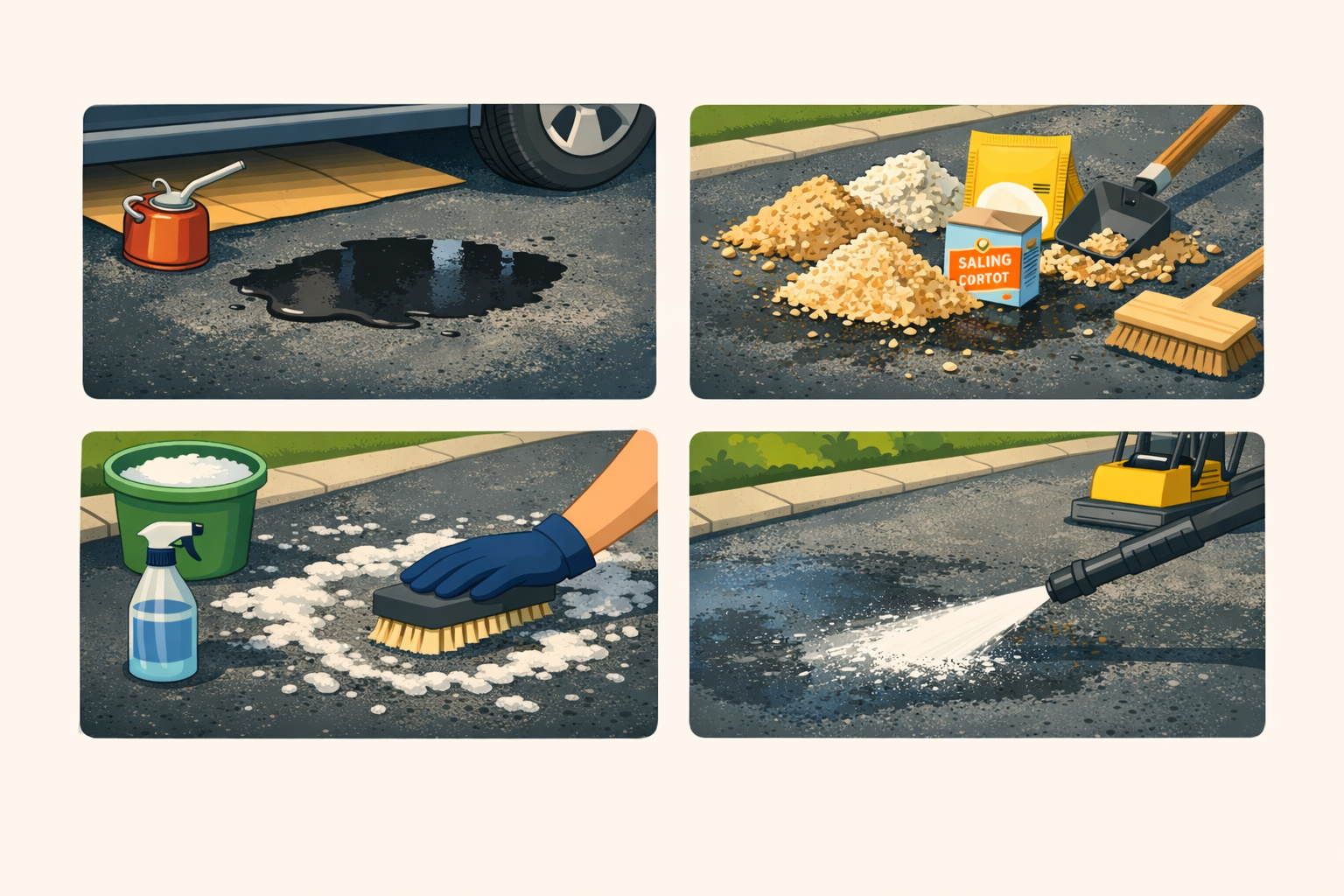
Once you’ve absorbed as much fresh oil as possible, it’s time to tackle the stain itself. Here are the most effective methods, listed from mildest to strongest:
Method 1: Detergent and Hot Water
For light, fresh stains, a good quality washing-up liquid or degreaser can be effective:
- Sprinkle powdered laundry detergent or pour liquid washing-up liquid generously over the stain
- Add a small amount of hot water to create a paste or concentrated solution
- Scrub vigorously with a stiff brush or broom in circular motions
- Let it sit for 20-30 minutes
- Scrub again, then rinse with hot water
- Repeat if necessary
This method works well for small, fresh stains but may not be sufficient for older or larger oil marks.
Method 2: Baking Soda Paste
Baking soda is a mild alkali that can help break down oils:
- Make a thick paste using baking soda and water
- Apply generously to the stain
- Scrub with a stiff brush
- Leave for 30 minutes to several hours
- Scrub again and rinse with hot water
For stubborn stains, leave the paste overnight before scrubbing and rinsing.
Method 3: Commercial Degreasers
Purpose-made driveway cleaners and degreasers are formulated specifically for removing oil from porous surfaces:
- Choose a product designed for tarmac/asphalt (avoid harsh solvents that can damage the surface)
- Follow the manufacturer’s instructions carefully
- Apply the product and allow the recommended dwell time
- Agitate with a stiff brush
- Rinse thoroughly
Many professional-grade products are available at DIY stores across Dublin and can be very effective for moderate stains.
Method 4: Pressure Washing
A pressure washer can be effective, especially when combined with a degreaser:
- Apply degreaser and allow it to work
- Use a pressure washer with appropriate PSI (around 3000 PSI for tarmac)
- Keep the nozzle moving to avoid damaging the surface
- Work from the outside of the stain toward the center
- Rinse the entire area thoroughly
Be cautious with pressure washers on older or damaged tarmac, as high pressure can dislodge the surface. Always test on an inconspicuous area first.
Method 5: Specialist Poultice Products
For deeply ingrained stains, poultice-based products can draw oil out from within the tarmac:
- Apply the poultice product according to instructions
- Allow it to dry completely (usually 24-48 hours)
- The drying process draws oil to the surface
- Remove the dried poultice
- Clean the area with degreaser if necessary
These products can be particularly effective on older, set-in stains that have resisted other methods.
What to Avoid
Some commonly suggested remedies can actually damage your tarmac driveway:
Petrol or diesel – While these can dissolve oil, they’ll also damage tarmac and create environmental hazards. Never use petroleum products to clean oil stains.
Strong solvents – Paint thinners, turpentine, and similar chemicals can soften and damage the bitumen in tarmac.
Wire brushes – These can scratch and damage the tarmac surface. Stick to stiff nylon or natural bristle brushes.
Excessive pressure washing – Too much pressure, especially focused in one spot, can blast away the surface of your tarmac.
Bleach – This won’t remove oil and can discolour your driveway.
Preventing Future Oil Stains
Prevention is always easier than cure when it comes to oil stains:
Regular vehicle checks – Inspect your car regularly for leaks. Catching a small leak early prevents major stains.
Use drip trays – If you’re doing vehicle maintenance, place drip trays or cardboard underneath to catch any spills.
Clean spills immediately – Keep cat litter or absorbent granules in your garage for quick response to fresh spills.
Consider sealant – Applying a quality tarmac sealant creates a protective barrier that makes the surface less porous and easier to clean. This should be reapplied every 2-3 years.
Park strategically – If your vehicle has a known leak that you’re addressing, park it on a section of driveway that’s less visible while you arrange repairs.
When Professional Help Is Needed
While many oil stains can be tackled with DIY methods, some situations call for professional intervention:
Extensive staining – If large areas of your driveway are affected, professional equipment and commercial-strength products may be necessary.
Old, set-in stains – Stains that have been there for months or years may have penetrated too deeply for household methods to be fully effective.
Surface damage – If the oil has actually degraded the tarmac surface, cleaning alone won’t restore it. The damaged section may need repair or resurfacing.
Recurring stains – If you’re constantly battling new oil stains, the underlying vehicle issue needs addressing, but you may also want to consider whether your driveway needs resurfacing or replacing.
Maintaining Your Tarmac Driveway
Beyond oil stain removal, regular maintenance keeps your tarmac driveway looking its best and extends its lifespan:
- Sweep regularly to remove debris
- Clean spills and stains promptly
- Fill any cracks before they expand
- Apply sealant every 2-3 years
- Avoid parking in the same spot constantly
- Use caution with heavy vehicles during hot weather when tarmac is softer
A well-maintained tarmac driveway should last 15-20 years or more, especially with professional installation and proper care.
Is It Time for a New Driveway?
Sometimes, despite your best efforts, an old tarmac driveway has accumulated enough stains, cracks, and wear that cleaning and patching no longer restore its appearance. If your driveway in Tallaght, Dundrum, Lucan, or anywhere across Dublin has seen better days, it might be time to consider replacement or resurfacing.
Modern tarmac driveways, professionally installed with proper foundations and drainage, resist staining better than older surfaces. Alternatively, you might consider block paving or resin bound surfacing, which offer different aesthetic options and maintenance characteristics.
Expert Driveway Solutions Across Dublin
At Unlimited Driveways & Patios, we understand that driveways face constant challenges – from oil stains to weather damage, heavy vehicle use to general wear and tear. Whether you need advice on maintaining your current driveway or you’re ready for a complete transformation, our experienced team is here to help.
We’ve installed and restored driveways throughout Dublin, Clondalkin, Swords, Malahide, Bray, Greystones, Celbridge, and Maynooth, delivering quality surfacing solutions that stand the test of time.
Our tarmac driveway services include:
- Complete new tarmac driveway installation
- Resurfacing and restoration of existing driveways
- Professional repairs and patching
- Drainage improvements to prevent water damage
- Sealant application for enhanced protection
- Expert advice on maintenance and care
Every project comes with:
- Free, no-obligation site surveys and quotes
- Quality materials built to withstand Irish weather
- Expert workmanship from our skilled team
- Proper drainage solutions as standard
- Fully guaranteed work with comprehensive insurance
- Competitive, transparent pricing
Tired of battling stubborn stains on an aging driveway? It might be time for an upgrade.
Call 01-4847182 today for your free site survey and quote.
Whether you’re in need of tarmac resurfacing, considering block paving, or exploring resin bound options, we’ll help you find the perfect solution for your property. Serving all areas across Dublin and surrounding counties – no job too big or small.
Unlimited Driveways & Patios – Transform your driveway with Dublin’s trusted specialists.