
If you have ever driven onto a driveway and felt the dip under your wheels, you will know how frustrating it can be. A sinking driveway is not just an eyesore, it often means something has gone wrong beneath the surface. As any experienced driveway installer Dublin homeowners trust will tell you, what you do not see matters more than what you do.
In our climate, with regular rain and varied soil conditions across the county, foundations are everything. Whether it is a block paving driveway or one of the newer resin driveways Dublin properties are opting for, proper ground preparation is what separates a long lasting surface from one that starts moving within a few years.
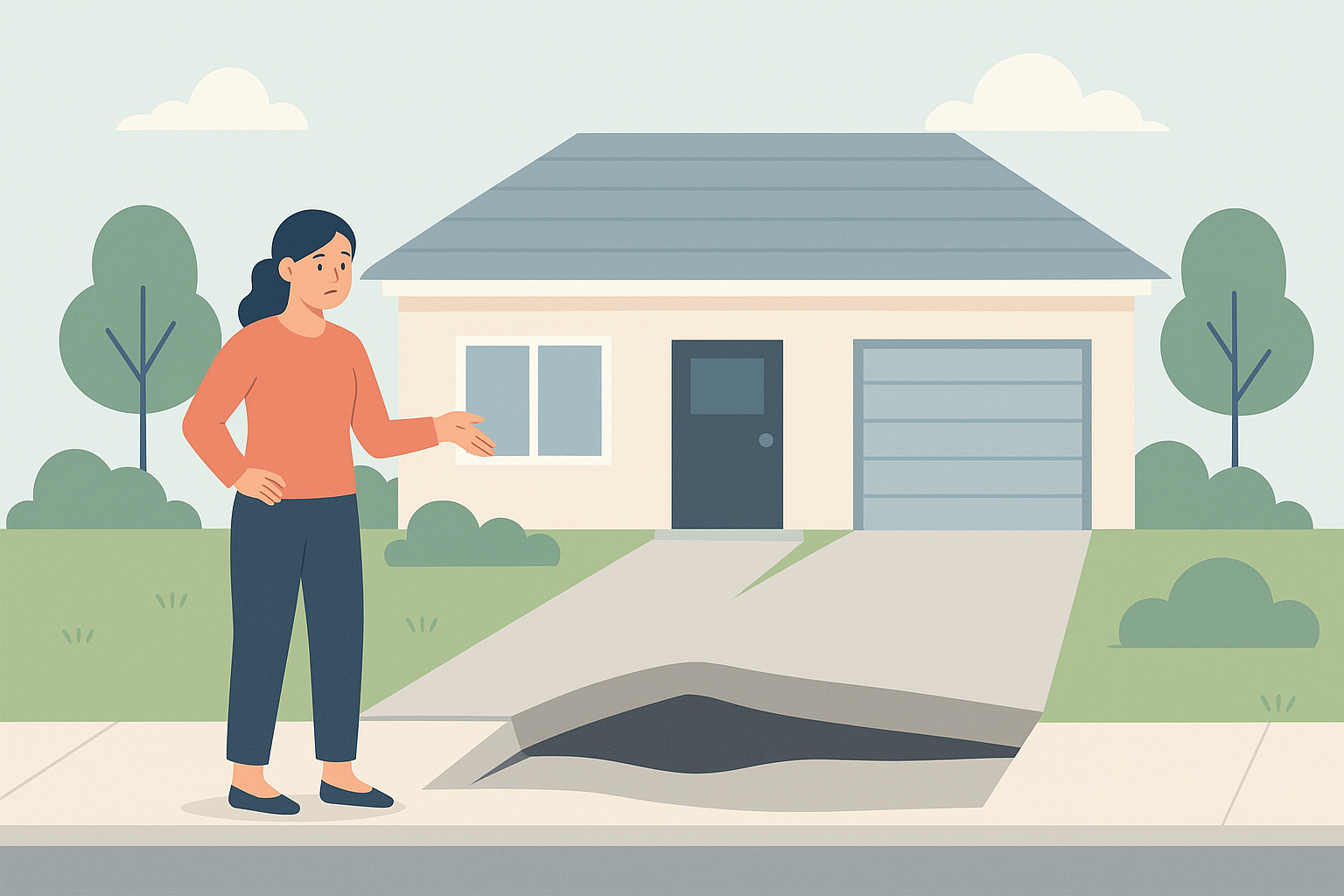
What Causes a Driveway to Sink?
There is usually no single reason for driveway subsidence. In most cases, it is a combination of shortcuts or overlooked details during installation.
Poor Ground Preparation
This is by far the most common cause. If the existing soil is not properly excavated and stabilised, it will continue to settle over time. Parts of Dublin, especially around newer estates in areas like Lucan and Clondalkin, can have softer ground where builders have backfilled after construction. If that material is not dug out far enough, the driveway above it has no solid support.
Inadequate Sub-base Depth
A driveway should never be laid directly onto soil. A proper sub-base, typically MOT Type 1 or equivalent crushed stone, needs to be installed at the correct depth and compacted thoroughly. For standard domestic driveway installation Dublin projects, this can mean 150mm or more depending on ground conditions. Skimping on that depth is a false economy and often leads to a sinking driveway within a few winters.
Low-Quality Materials
We sometimes see surfaces that look fine at first, but the base materials underneath were poor quality or too fine. They hold water instead of draining it. Over time, that weakens the structure and encourages movement.
Poor Drainage and Water Damage
Water is one of the biggest causes of driveway subsidence. Without proper driveway drainage solutions, rainwater seeps into the lower layers. In colder snaps, that water expands and contracts. Even without frost, constant saturation softens subsoil. Pooling water near a garage or front step is usually a red flag that the slope or drainage channels were not designed correctly.
Heavy Vehicle Loads
Many homeowners plan for a family car or two, then later add a van, camper or small commercial vehicle. A driveway not built to handle that weight will eventually show it. We often get calls from property managers who notice depressions where delivery vans park repeatedly.
Warning Signs of a Sinking Driveway
Spotting issues early can save you from a more expensive repair later.
Uneven Surfaces
If certain areas feel lower underfoot or your car seems to tilt slightly when parked, that could point to settling underneath.
Pooling Water
A well built driveway should shed water naturally. If you are seeing puddles that linger long after rain, especially in the same spot every time, something has shifted.
Cracks and Gaps
On a block paving driveway, you may notice widening joints or blocks separating. With tarmac or concrete, cracks often form where the base has dropped.
Edges Sinking or Spreading
Strong edging restraints keep the entire surface locked in place. When edges start dipping or spreading outward, it usually means they were not secured on a solid concrete haunch.
How Professionals Prevent Driveway Subsidence
Preventing issues starts long before the surface layer goes down.
Proper Excavation Depth
Every successful installation begins with digging out to the right depth. That depth depends on soil type and intended usage. In parts of North Dublin where clay content is higher, we often excavate further to reach stable ground.
High-Quality Sub-base Materials
MOT Type 1 stone is commonly used because it compacts tightly and provides excellent load bearing support. Inferior fill or mixed rubble simply does not perform the same way over time.
Mechanical Compaction in Layers
Sub-base should be laid and compacted in layers, not dumped in all at once. Mechanical plate compactors or rollers ensure there are no hidden soft spots. It takes longer, but it is essential if you want to prevent driveway sinking.
Correct Edging Restraints
Kerbs or edge blocks must be bedded and haunched properly in concrete. They act as the frame holding everything together, particularly for block paving driveway projects.
Effective Drainage Systems
Good driveway drainage solutions may include channel drains, correct falls away from the house and permeable materials where suitable. With resin driveways Dublin homeowners often choose permeable systems, but even these need the right base and outfall to work properly.
Why Choosing an Experienced Installer Matters
Driveways are not one size fits all. Ground conditions in Dundrum can differ from those in Swords or Bray. An experienced contractor will assess soil, slope and usage before recommending a solution.
Long term durability comes from understanding these local variables. It is not just about laying a tidy surface, it is about building something that lasts 15 to 20 years without movement. Proper workmanship and clear guarantees offer peace of mind that shortcuts were not taken.
What to Do If Your Driveway Is Already Sinking
If you are already dealing with a sinking driveway, do not panic. The solution depends on how severe the movement is.
In some cases, particularly with a block paving driveway, sections can be lifted, the base corrected and the blocks relaid. This is often possible when the issue is localised and caught early.
However, if there is widespread driveway subsidence caused by poor original groundwork, a full replacement may be the more cost effective long term option. Simply patching the surface without fixing the base usually leads to the same problem returning.
An expert assessment will identify whether the problem is drainage related, material related or structural. From there, you can make an informed decision rather than guessing.
For homeowners across Dublin City, South Dublin, North Dublin and Greater Dublin including Tallaght, Dundrum, Lucan, Clondalkin, Swords, Malahide, Bray, Greystones, Celbridge and Maynooth, getting the groundwork right from the start makes all the difference. Whether you are considering patio installation Dublin, planning a new driveway installation Dublin or worried about prevent driveway sinking on an existing surface, proper preparation is everything. Unlimited Driveways and Patios have built their reputation on taking the time to do the unseen work properly so clients are not calling back in two years with dips and cracks.
Contact Unlimited Driveways & Patios for a free site survey and expert driveway installation advice.