
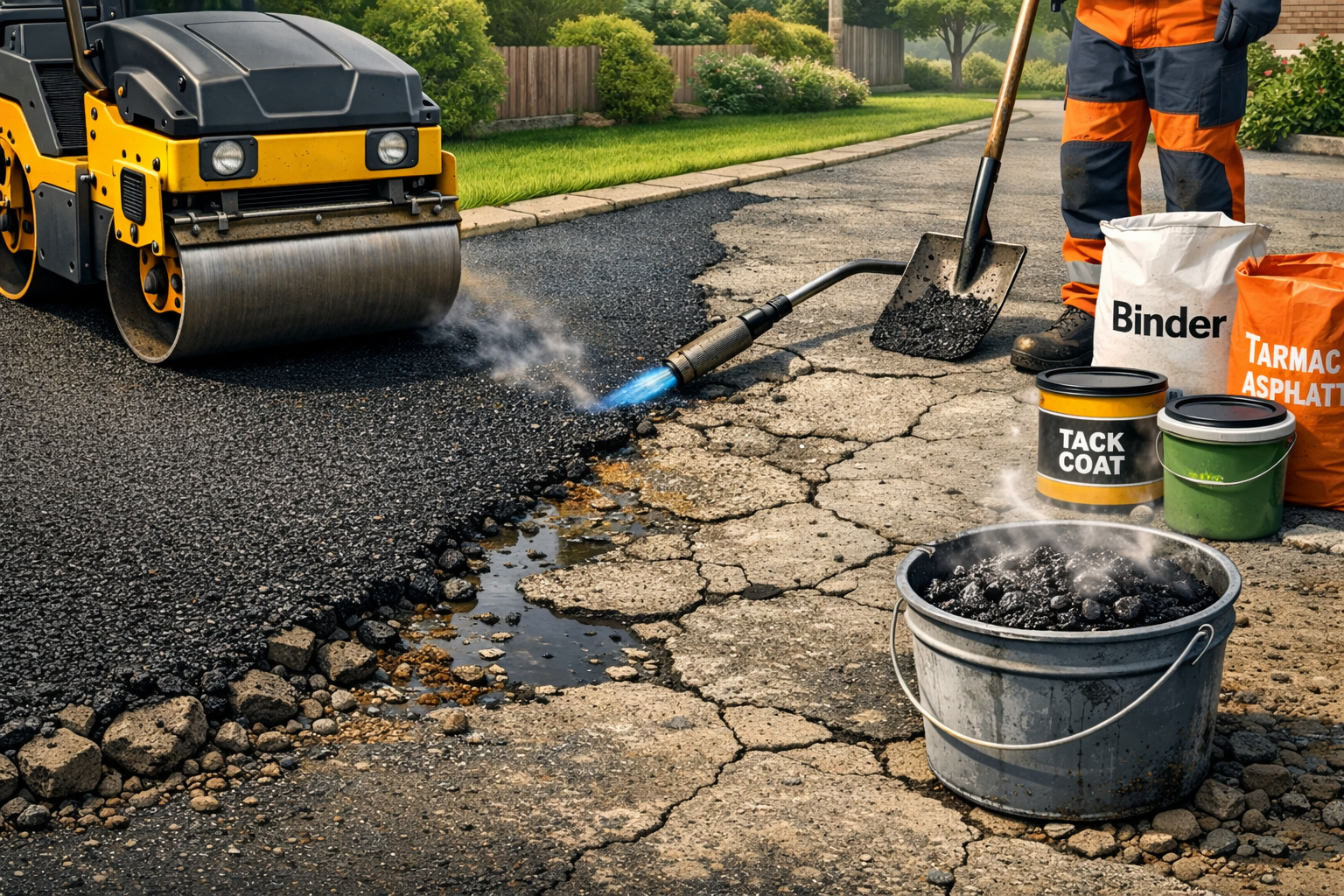
If you have an existing concrete driveway that’s looking tired, cracked, or simply outdated, you might be wondering whether you can simply lay tarmac over the top rather than going through the expense and disruption of complete removal and replacement. It’s a question we hear frequently from homeowners across Dublin, and the answer is: yes, you can – but whether you should depends on several important factors.
At Unlimited Driveways & Patios, we’ve overlaid tarmac on concrete driveways throughout Dublin, and we’ve also advised many homeowners when this approach isn’t suitable. Let’s explore everything you need to know about laying tarmac over concrete, including when it works well, when it doesn’t, and what the process involves.
The Short Answer: Yes, But With Conditions
Tarmac can be successfully laid over concrete, and when done correctly, it can provide an excellent, cost-effective solution that gives your driveway a fresh new surface. However, this approach only works when specific conditions are met. Laying tarmac over unsuitable concrete will lead to problems that appear within months, wasting your money and potentially creating worse issues than you started with.
The key is understanding what makes a concrete base suitable for tarmac overlay and recognising when complete removal is the better option.
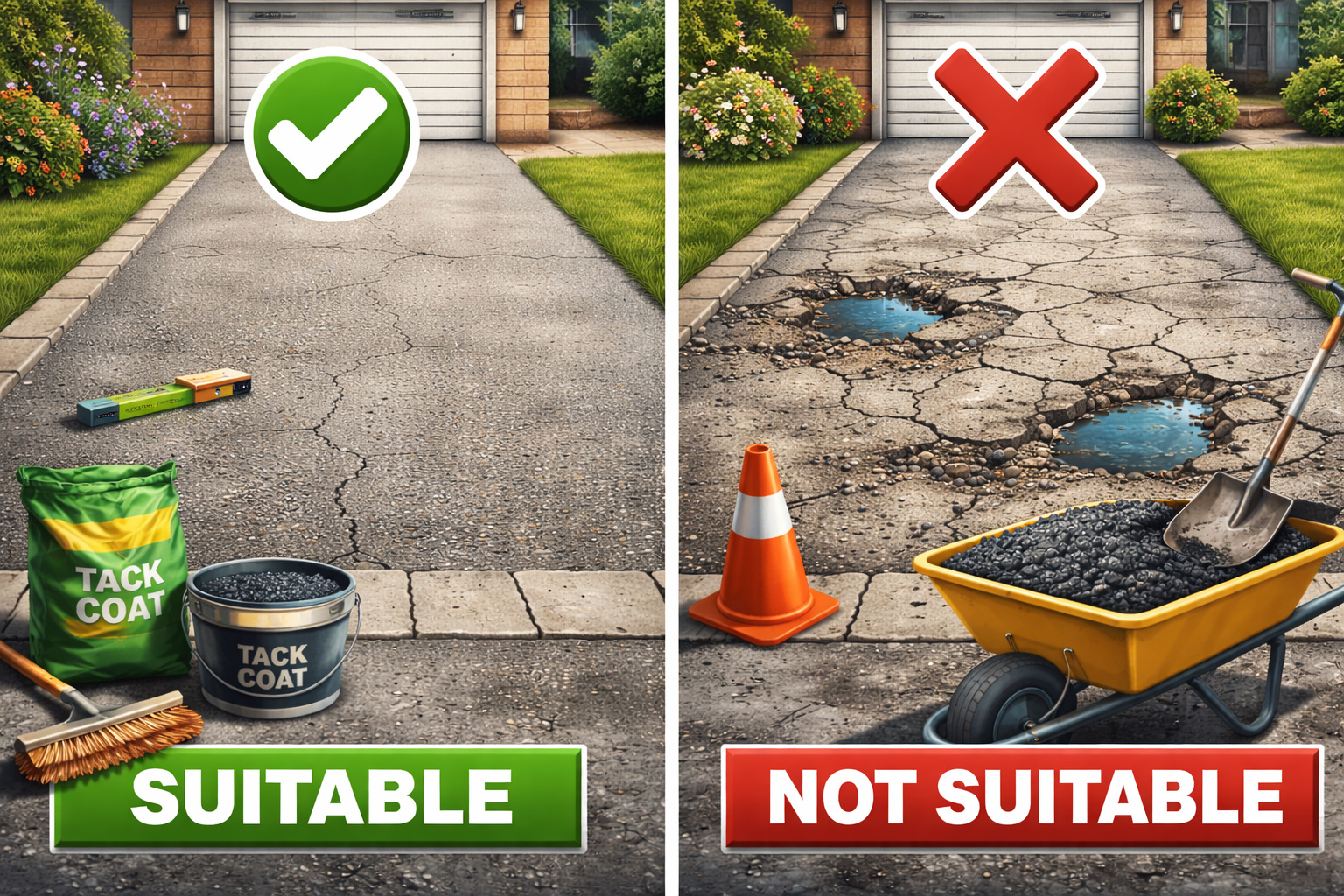
When Laying Tarmac Over Concrete Works Well
Tarmac overlay is an excellent solution when your concrete driveway meets these criteria:
The Concrete is Structurally Sound
The existing concrete must be in fundamentally good condition. This means:
- No major cracking or breaking up
- No significant movement or instability
- No widespread deterioration or crumbling
- The concrete slab is still properly supported by its sub-base
Think of the concrete as the foundation for your new tarmac surface. If the foundation is solid, the overlay will perform well. If the foundation is compromised, the tarmac will simply follow the same problems.
The Surface is Relatively Level
While minor imperfections can be addressed, the concrete should be reasonably level without major dips, high spots, or severe unevenness. Tarmac can smooth over small variations, but it can’t correct major levels issues – and if you try to use thick layers of tarmac to fill deep depressions, you’ll create weak spots prone to failure.
Drainage is Adequate
The existing concrete must have proper drainage with appropriate falls to channel water away. If water currently pools on your concrete driveway, simply covering it with tarmac won’t solve the problem – it will just create a tarmac surface that pools water, which will accelerate deterioration.
The Edges are Manageable
You need to consider how the new tarmac surface will meet surrounding areas. The tarmac layer (typically 40-50mm thick) will raise the surface level, which needs to work with:
- Your garage entrance
- Doorway thresholds
- Adjacent paving or paths
- Drainage gullies
- Street level
If the height increase creates problems in any of these areas, modifications may be needed.
You Want a Cost-Effective Update
If your concrete is sound but aesthetically unappealing, tarmac overlay provides a cost-effective facelift. It’s typically 30-50% cheaper than complete removal and replacement, and the work is completed much faster with less disruption.
When You Shouldn’t Lay Tarmac Over Concrete
Despite the potential benefits, there are situations where tarmac overlay is not advisable:
Extensively Cracked or Damaged Concrete
If your concrete driveway has extensive cracking, these cracks will telegraph through to the tarmac surface. While small hairline cracks may be acceptable, networks of cracks, deep fissures, or areas where the concrete is breaking up make poor foundations for tarmac.
Cracks indicate movement, and that movement will continue after the tarmac is laid, causing the new surface to crack in the same patterns. This is called reflective cracking, and it’s one of the most common problems with poorly executed tarmac overlays.
Subsidence or Settlement Issues
If areas of your concrete have sunk or settled due to sub-base problems, laying tarmac over the top doesn’t address the underlying issue. The subsidence will continue, and your new tarmac surface will develop the same problems within a short time.
Very Thin or Weak Concrete
Old concrete driveways that are too thin (less than 75-100mm) or have deteriorated structurally won’t provide adequate support for tarmac. The combined weight of the tarmac and vehicles may cause the concrete to break up underneath.
Severe Level Problems
If your concrete driveway has major level issues – significant slopes in the wrong direction, large depressions, or dramatic unevenness – tarmac overlay isn’t the solution. These problems need to be addressed at the foundation level.
Height Restrictions
When the additional height created by the tarmac layer creates practical problems with doors, garage entrances, or drainage that can’t be easily resolved, complete removal and replacement at the correct level is necessary.
The Process of Laying Tarmac Over Concrete
When conditions are right, here’s how professional installation proceeds:
Step 1: Assessment and Preparation
A thorough assessment determines whether your concrete is suitable. This includes:
- Inspecting for cracks, movement, and structural integrity
- Checking drainage and levels
- Identifying any repairs needed before overlay
- Planning edge details and height transitions
Step 2: Cleaning
The concrete surface must be completely clean for proper adhesion. This involves:
- Removing all dirt, debris, oil stains, and vegetation
- Pressure washing to remove loose material
- Allowing the surface to dry thoroughly
- Treating any oil stains that could prevent bonding
A clean surface is crucial – tarmac won’t bond properly to dirty or contaminated concrete.
Step 3: Crack Repair
Significant cracks in the concrete should be repaired before tarmac is laid:
- Cracks are cleaned out and filled with appropriate materials
- Some installers apply a reinforcement membrane over crack-prone areas
- Very active cracks may indicate the concrete isn’t suitable for overlay
This step doesn’t guarantee cracks won’t reflect through, but it reduces the likelihood and severity.
Step 4: Tack Coat Application
A bitumen tack coat (bonding layer) is applied to the concrete surface. This sticky layer:
- Creates adhesion between concrete and tarmac
- Prevents the tarmac from delaminating (separating) from the concrete
- Seals the surface against moisture
The tack coat must be applied evenly and allowed to cure slightly before tarmac is laid – not too wet (tarmac will slide) and not too dry (adhesion fails).
Step 5: Edge Preparation
Edges are prepared to support the tarmac:
- Edge forms may be installed
- Existing edges are prepared to receive new material
- Transitions to adjacent areas are planned
Proper edge support prevents the tarmac from breaking away at the perimeters.
Step 6: Tarmac Installation
The tarmac layer is laid, typically:
- Thickness: 40-50mm for domestic driveways (though this can vary)
- Layers: Sometimes installed in two courses (base and wearing course) for better performance
- Compaction: Thoroughly compacted with a roller to ensure density and adhesion
The tarmac must be laid while hot and compacted properly to achieve maximum density and bonding to the concrete below.
Step 7: Finishing
Final steps include:
- Ensuring smooth transitions at edges
- Checking levels and drainage
- Final rolling for a smooth finish
- Allowing proper curing time before use
Benefits of Tarmac Over Concrete
When executed properly on suitable concrete, this approach offers several advantages:
Cost savings – Typically 30-50% less expensive than complete removal and replacement
Speed – Installation is usually completed in 1-2 days rather than the 4-7 days needed for complete replacement
Less disruption – No heavy excavation equipment or skip lorries needed for concrete removal
Reduced waste – Existing concrete remains in place, creating less environmental impact
Utilises sound foundation – If your concrete sub-base is good, you’re building on solid foundations
Improved aesthetics – Fresh tarmac surface dramatically improves appearance
Better surface – Tarmac provides a smoother, more flexible surface than aging concrete
Potential Drawbacks and Considerations
It’s important to understand the limitations:
Reflective cracking – Cracks in the concrete may eventually appear in the tarmac above
Height increase – The additional 40-50mm height can create practical challenges
Not a complete solution – You’re working with the existing foundation’s limitations
Shorter lifespan potential – May not last as long as a completely new installation with proper sub-base
Hidden problems – Underlying issues with the concrete won’t be discovered until they cause problems
Alternatives to Consider
Depending on your situation, you might also want to consider:
Complete Removal and Replacement
Starting fresh with proper excavation, sub-base, and new tarmac provides the longest-lasting solution and allows you to address any underlying drainage or level issues. While more expensive initially, it may offer better long-term value.
Concrete Resurfacing
If you prefer to stay with concrete, resurfacing options include overlaying with new concrete, applying decorative concrete coatings, or using concrete resurfacing products.
Block Paving or Resin
Complete removal also gives you the opportunity to explore alternative materials like block paving or resin bound surfacing, which offer different aesthetic and functional benefits.
The Importance of Professional Assessment
The decision of whether to overlay tarmac on your concrete driveway isn’t one to make without expert input. What looks like minor cracking to an untrained eye might indicate serious structural issues. Conversely, a driveway that looks quite poor might actually be perfectly suitable for overlay once cleaned and prepared.
Professional installers bring:
- Experience assessing concrete condition
- Knowledge of when overlay will work and when it won’t
- Understanding of proper preparation and bonding techniques
- Equipment to execute the work correctly
- Honest advice about whether overlay or replacement is the better investment
Beware of contractors who are willing to lay tarmac over clearly unsuitable concrete – they may take your money and disappear before the inevitable problems appear.
Making the Right Choice for Your Dublin Driveway
Every driveway situation is unique. The age of your concrete, its condition, how it was originally installed, your budget, and your long-term plans for the property all factor into the decision.
Some questions to consider:
- How long do you plan to stay in the property?
- What’s your budget for the work?
- Are there underlying drainage issues that need addressing?
- How much does the aesthetic update matter versus long-term performance?
- Can you accommodate the height increase, or would it create problems?
Honest answers to these questions, combined with professional assessment of your concrete’s condition, will guide you to the right solution.
Expert Driveway Solutions Across Dublin
At Unlimited Driveways & Patios, we provide honest, expert advice on whether tarmac overlay is right for your concrete driveway. We’ve worked on properties throughout Dublin, Tallaght, Dundrum, Lucan, Clondalkin, Swords, Malahide, Bray, Greystones, Celbridge, and Maynooth, and we understand that every situation is different.
Our approach includes:
- Free, no-obligation site surveys – We’ll assess your existing concrete and provide honest recommendations
- Expert diagnosis – We identify any underlying issues that need addressing
- Multiple options – We present tarmac overlay, complete replacement, or alternative solutions with transparent pricing for each
- Quality installation – When overlay is appropriate, we execute it properly with correct preparation, bonding, and installation techniques
- Alternative materials – We can also discuss block paving, resin bound, or other options if they better suit your needs
- Guaranteed work – All installations are fully guaranteed and insured
- Competitive pricing – Fair, transparent quotes with no hidden costs
Whether tarmac overlay or complete replacement is right for your property, we deliver professional results that enhance your home’s kerb appeal and provide lasting value.
Not sure if your concrete driveway is suitable for tarmac overlay? Get expert advice.
Call 01-4847182 today for your free site survey and honest assessment.
We serve all areas across Dublin and surrounding counties. Our experienced team will evaluate your driveway, explain your options, and help you make the best decision for your property and budget. No pressure, no obligation – just honest, expert advice.
Unlimited Driveways & Patios – Your trusted partners for tarmac installation and driveway solutions across Dublin.