
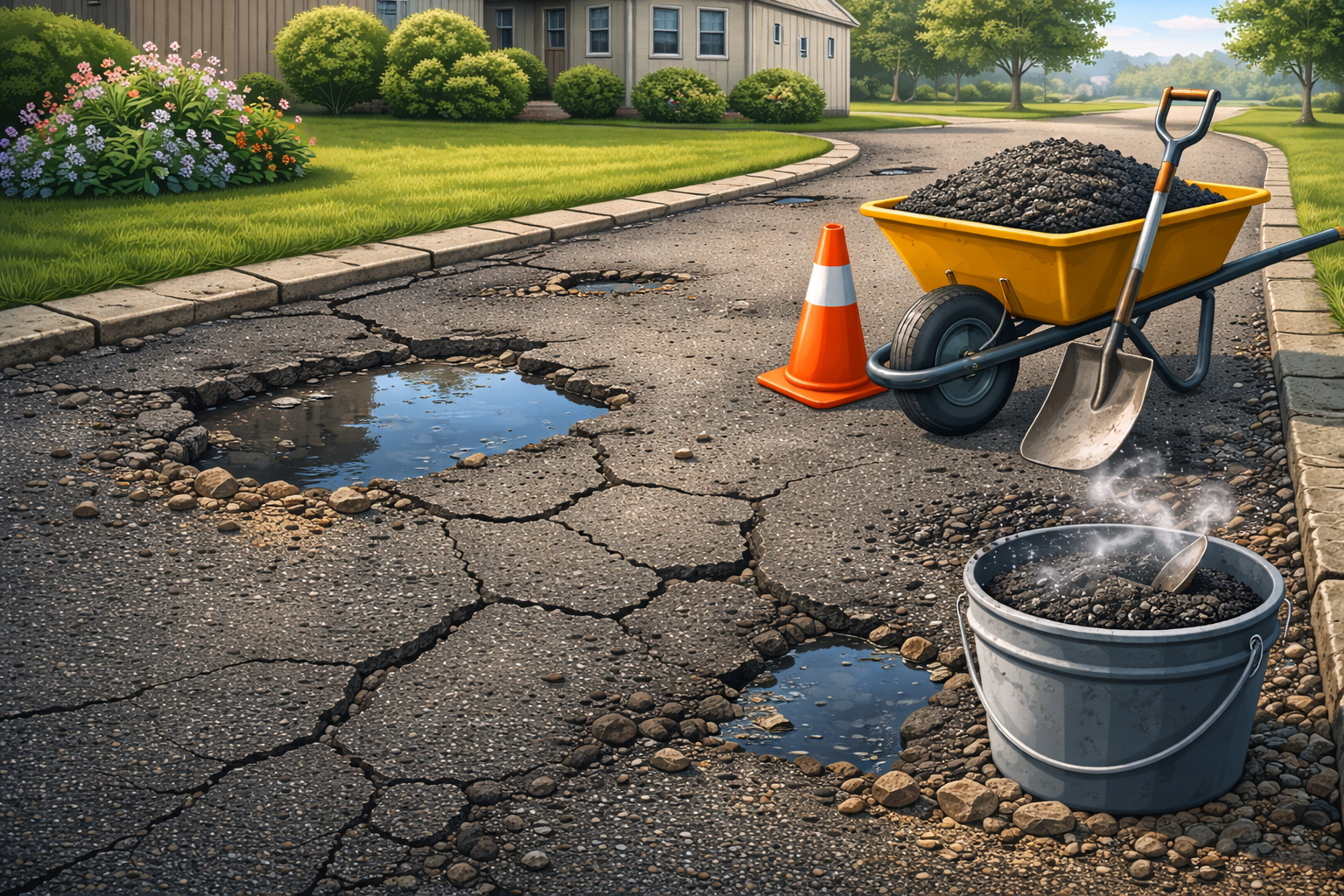
If you’re considering a new tarmac driveway for your Dublin home, or you’re wondering whether your existing driveway is approaching the end of its lifespan, understanding how long tarmac lasts is crucial for planning and budgeting. Tarmac is one of the most popular driveway materials in Ireland, valued for its durability, affordability, and quick installation – but like any surface, it won’t last forever.
At Unlimited Driveways & Patios, we’ve installed and maintained tarmac driveways across Dublin for years, and we understand exactly what affects their longevity. Let’s explore how long you can expect your tarmac driveway to last and what factors influence its lifespan.
The Expected Lifespan of a Tarmac Driveway
A professionally installed tarmac driveway typically lasts 15 to 20 years before requiring major repairs or complete resurfacing. However, this is a general estimate, and the actual lifespan can vary significantly based on several factors, which we’ll explore in detail.
Some well-maintained tarmac driveways in ideal conditions can last 25 years or more, while others may show signs of significant deterioration after just 10 years. The key difference? Installation quality, maintenance, and usage.
Factors That Affect Tarmac Driveway Longevity
1. Quality of Installation
The most critical factor determining your driveway’s lifespan is how well it was installed in the first place. A properly installed tarmac driveway requires:
Adequate excavation – The area must be dug to the correct depth to accommodate sub-base and tarmac layers.
Proper sub-base – A compacted Type 1 MOT aggregate base, typically 100-150mm deep for domestic driveways, provides essential support and drainage.
Correct tarmac thickness – For standard domestic use, a minimum of 50-75mm of tarmac is needed, often laid in two layers (base course and wearing course).
Effective drainage – Proper falls and drainage prevent water accumulation, which is one of the biggest enemies of tarmac.
Professional compaction – Each layer must be thoroughly compacted with appropriate equipment.
Cutting corners at any of these stages significantly reduces your driveway’s lifespan. A poorly installed driveway might start developing problems within just a few years, regardless of how well you maintain it.
2. Climate and Weather Conditions
Ireland’s climate presents particular challenges for tarmac driveways. Our frequent rain, freeze-thaw cycles, and temperature variations all impact tarmac longevity:
Water infiltration – Rain can seep through cracks and underneath the tarmac, washing away the sub-base and causing subsidence.
Freeze-thaw damage – Water that penetrates the surface can freeze in winter, expanding and creating cracks. When it thaws, these cracks allow more water in, creating a damaging cycle.
UV exposure – While less intense in Ireland than sunnier climates, UV radiation still gradually degrades the bitumen binder, causing the surface to become brittle over time.
Temperature extremes – Hot summer days can soften tarmac, making it more susceptible to indentation, while cold winters make it brittle and prone to cracking.
This is why proper installation with good drainage is so important in the Dublin climate – it helps protect against our weather’s worst effects.
3. Usage and Traffic
How you use your driveway significantly impacts its lifespan:
Vehicle weight – Standard family cars cause minimal stress, but regularly parking heavy vehicles (large vans, lorries, motorhomes) accelerates wear.
Traffic volume – A driveway used by multiple vehicles daily will wear faster than one used occasionally.
Turning and manoeuvring – Repeatedly turning the steering wheel while stationary (particularly on hot days when tarmac is softer) can scuff and damage the surface.
Sharp objects – Dropped tools, dragged items, or regular use of stiletto heels can create indentations and damage.
4. Maintenance
Regular maintenance can extend your tarmac driveway’s life considerably. Well-maintained driveways consistently outlast neglected ones by several years:
Crack filling – Addressing small cracks promptly prevents water infiltration and stops them from spreading.
Sealant application – Applying a quality tarmac sealant every 2-3 years protects against UV damage, water penetration, and oil stains.
Cleaning – Regular sweeping and occasional washing prevent debris buildup and staining.
Vegetation control – Removing weeds growing through cracks prevents them from widening.
Prompt repairs – Fixing small problems quickly prevents them from becoming major issues.
5. Ground Conditions
The soil type and ground conditions beneath your driveway play a significant role:
Clay soil – Common in parts of Dublin, clay expands when wet and contracts when dry, creating movement that can crack tarmac.
Poor drainage – Ground that doesn’t drain well can lead to water accumulation under the driveway.
Tree roots – Nearby trees can send roots under the driveway, causing lifting and cracking.
Previous ground use – If the area was previously disturbed or poorly compacted, settlement can occur.
Professional installers assess ground conditions and adjust the sub-base accordingly to compensate for challenging conditions.
Timeline of Tarmac Driveway Deterioration
Understanding what typically happens at different stages helps you recognize when your driveway needs attention:
Years 1-5: Peak Condition
A newly installed tarmac driveway should look and perform excellently during these early years. You might notice:
- Slight colour fading as the surface weathers (this is normal)
- Minor hairline cracks may appear, particularly at joints
- The surface remains smooth and even
During this period, basic maintenance like cleaning and applying sealant sets the foundation for long-term durability.
Years 6-10: Early Aging
Around this point, you may start seeing more noticeable signs of aging:
- More visible surface cracks
- Some slight fading or discolouration
- Possible minor edge deterioration
- Small patches of surface wear in high-traffic areas
With proper maintenance, these issues remain minor and don’t affect functionality. This is an important time to stay on top of crack filling and sealant application.
Years 11-15: Middle Age
By this stage, more significant wear becomes apparent:
- Increased cracking, particularly in high-stress areas
- Possible minor surface deterioration or potholes
- Edge crumbling may become more pronounced
- Some areas may show slight subsidence if drainage hasn’t been perfect
Many driveways are still perfectly serviceable at this point but may benefit from patching repairs and certainly need ongoing maintenance.
Years 16-20: Approaching Replacement
In the later years, you’ll likely notice:
- Extensive cracking across much of the surface
- Multiple areas requiring patching
- Possible significant edge deterioration
- Areas of subsidence or unevenness
- Surface becoming brittle and prone to breaking up
At this stage, you’re facing a decision: continue with increasingly frequent repairs or invest in resurfacing or replacement.
Years 20+: Extended Life or Replacement
Some well-maintained driveways in excellent conditions last beyond 20 years, but they’re the exception rather than the rule. Most driveways at this age are candidates for replacement, as:
- Repair costs start approaching replacement costs
- The surface is extensively damaged
- The aesthetic appeal has significantly diminished
- The sub-base may also be deteriorating
Common Signs Your Tarmac Driveway Needs Repair
Watch for these indicators that your driveway needs professional attention:
Cracks – Small cracks are normal and easily repaired, but extensive cracking suggests underlying issues.
Potholes – These form when water penetrates cracks, washing away the sub-base. They worsen rapidly if not addressed.
Surface deterioration – Areas where the surface is breaking up or becoming rough indicate aging or damage.
Edge crumbling – Edges taking the most stress often deteriorate first.
Subsidence – Sinking or uneven areas suggest sub-base failure or drainage problems.
Pooling water – If water collects in areas rather than draining away, it indicates settlement or inadequate drainage.
Widespread fading or discolouration – While some fading is normal, extensive colour loss suggests UV degradation and surface aging.
Extending Your Driveway’s Lifespan
You can maximize your tarmac driveway’s longevity with these proactive steps:
Regular Maintenance Schedule
- Weekly: Sweep away debris and leaves
- Monthly: Check for new cracks or damage
- Every 6 months: Clean thoroughly, removing stains
- Every 2-3 years: Apply quality tarmac sealant
- Annually: Inspect drainage and fill any cracks
Protective Measures
- Avoid parking heavy vehicles in the same spot repeatedly
- Don’t turn your steering wheel while stationary on hot days
- Clean oil spills immediately
- Avoid using sharp tools or objects on the surface
- Consider installing edge restraints if edges are vulnerable
Professional Inspections
Having a professional inspect your driveway every few years can identify developing problems before they become serious. What looks like a minor crack to an untrained eye might indicate a drainage issue that needs addressing.
Repair vs. Resurface vs. Replace: Making the Right Choice
As your driveway ages, you’ll face decisions about the best approach:
Minor Repairs (Good for driveways under 10-12 years)
Individual cracks, small potholes, or edge damage can be patched. This is cost-effective for addressing isolated problems and extends the driveway’s life.
Resurfacing (Good for driveways 10-15 years old)
If the sub-base is still sound but the surface is extensively worn, laying a new tarmac layer over the existing one can add 10-15 years of life at a fraction of the cost of complete replacement.
Complete Replacement (Typically needed after 15-20+ years)
When both the surface and sub-base are deteriorating, or damage is extensive, complete removal and reinstallation provides a fresh start and another 15-20 years of service.
The Value of Professional Installation
The single most important factor in how long your tarmac driveway lasts is the quality of the initial installation. Professional installation costs more upfront than budget alternatives, but the extended lifespan and reduced maintenance needs make it far more economical over time.
Consider this: a professionally installed driveway costing £3,000 that lasts 20 years costs £150 per year. A budget installation at £2,000 that needs replacement after 10 years costs £200 per year – and that’s before counting the inconvenience and additional repair costs along the way.
Professional installers like Unlimited Driveways & Patios bring:
- Proper equipment for excavation and compaction
- Experience assessing ground conditions
- Knowledge of appropriate sub-base depths and materials
- Skills in creating effective drainage
- Understanding of proper tarmac laying techniques
- Quality materials from reputable suppliers
When It’s Time for a New Driveway
If your tarmac driveway is showing multiple signs of serious deterioration, constantly needs repairs, or is simply past its prime, replacement might be the best investment. A new driveway doesn’t just restore functionality – it transforms your property’s kerb appeal and adds value to your home.
Modern installation techniques, improved materials, and proper drainage design mean today’s tarmac driveways often outperform those installed 15-20 years ago. You might also want to consider alternative materials like block paving or resin bound surfacing, each offering different benefits and aesthetic options.
Expert Tarmac Solutions Across Dublin
At Unlimited Driveways & Patios, we’ve installed, repaired, and resurfaced tarmac driveways throughout Dublin, Tallaght, Dundrum, Lucan, Clondalkin, Swords, Malahide, Bray, Greystones, Celbridge, and Maynooth. Our family-run business combines decades of experience with a commitment to quality that ensures your driveway stands the test of time.
Whether your driveway needs minor repairs, complete resurfacing, or full replacement, we provide:
- Free, no-obligation site surveys – We’ll assess your driveway’s condition and recommend the most cost-effective solution
- Expert installation – Proper excavation, quality sub-base, adequate tarmac thickness, and effective drainage as standard
- Quality materials – We use only premium materials designed to withstand Irish weather conditions
- Professional workmanship – Our experienced team brings precision and care to every project
- Comprehensive guarantees – All work is fully guaranteed and insured for your peace of mind
- Transparent pricing – Competitive quotes with no hidden costs
- Alternative options – We can also discuss block paving, resin bound, or other surfacing solutions if you’re considering alternatives to tarmac
From simple crack repairs to complete new installations, we deliver results that enhance your property and provide lasting value.
Is your tarmac driveway showing its age? Get expert advice and a free quote.
Call 01-4847182 today for your free site survey.
We serve all areas across Dublin and surrounding counties. Whether you need repairs to extend your current driveway’s life or you’re ready for a complete transformation, our team is here to help. No job too big or small.
Unlimited Driveways & Patios – Dublin’s trusted specialists for tarmac driveways that last.