
If you’ve ever stepped out onto your patio on a damp morning and felt that slight slip under your shoes, you’ll know how quickly moss can become more than just an eyesore. I’ve lost count of the number of homeowners I’ve spoken to in Ireland who say the same thing: “It only took a few weeks and it was back again.”
Moss thrives in our climate, especially on shaded driveways and patios that stay damp for long periods. The good news is that with the right approach, you can keep it under control for good. If you’ve already invested in expert patio installation and maintenance services, protecting that surface properly makes all the difference long term.
Let’s break it down properly so you’re not chasing the same problem year after year.
Why Moss Grows on Patios and Driveways
Moss isn’t randomly appearing. It grows where conditions suit it, and Irish weather is ideal. Plenty of rain, mild winters and shaded gardens create the perfect environment.
Poor Drainage
One of the biggest causes I see is poor drainage. If water sits on paving after heavy rain, moss will follow. Even slight dips in block paving or slabs can hold enough moisture to encourage growth.
If you are unsure whether drainage is the issue, it is worth understanding how surface water should move away from your home. You can learn more about correct patio and driveway drainage here: drainage solutions for driveways and patios.
Shade and Limited Airflow
Areas tucked behind garages, under trees or along boundary walls rarely dry out properly. In places like Dundrum and Clondalkin where gardens can be overlooked and compact, I often see moss thriving along north-facing fences where sunlight barely reaches.
Organic Debris
Fallen leaves, soil from plant pots and general debris trap moisture. Once they settle into joints, especially with block paving, they provide a perfect base for moss and weeds to take hold.
Older or Worn Surfaces
Concrete and older slabs become more porous over time. Tiny surface cracks hold moisture and dirt, which encourages growth. If your paving hasn’t been sealed or maintained for years, moss will establish much faster.
Effective Ways to Remove Moss Safely
When people ring me, the first question is usually “What’s the quickest way to get rid of it?” Quick is fine, but safe and thorough is better.
Manual Removal
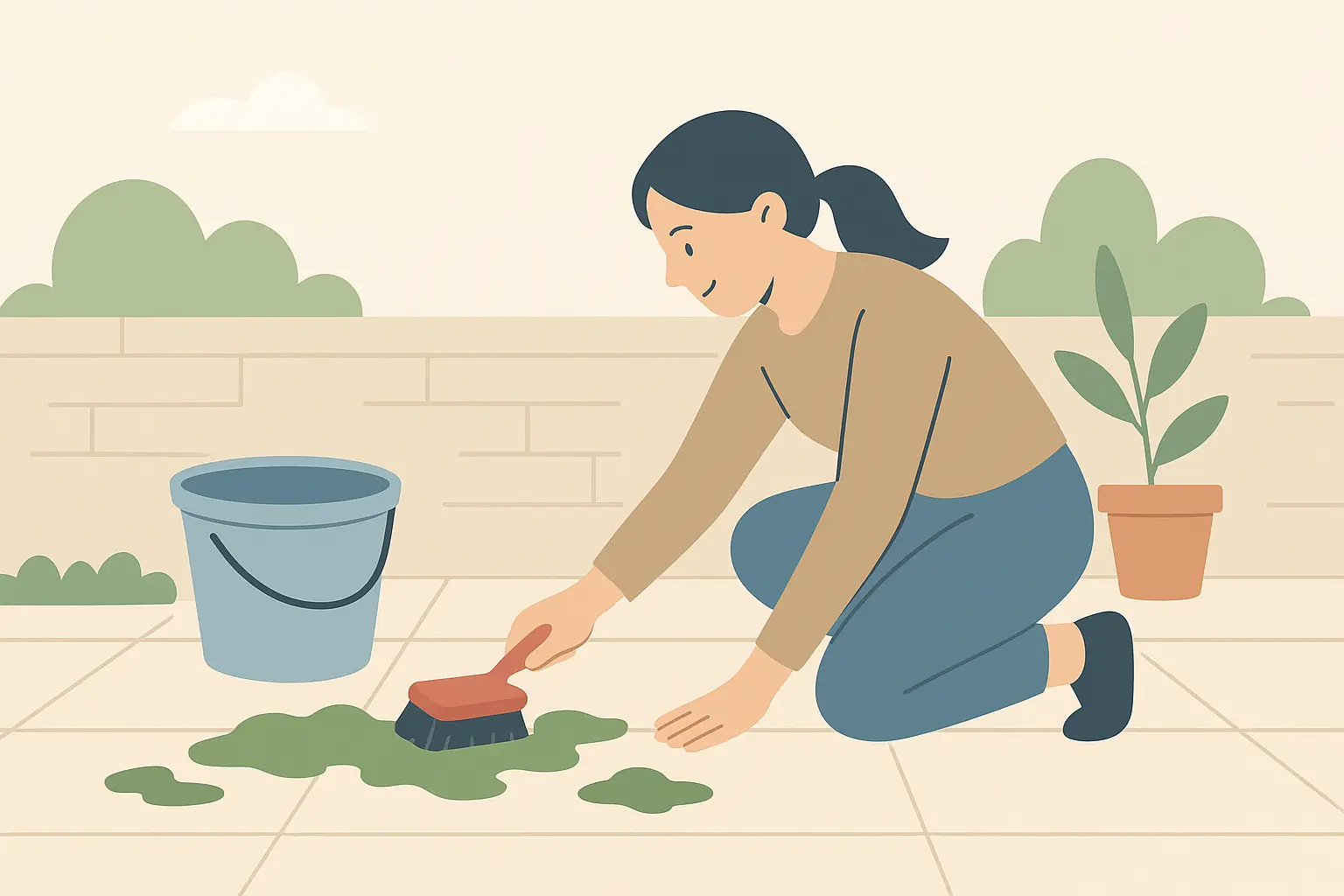
For small patches, a stiff brush and some elbow grease still work well. Scrape moss out of joints properly. Do it on a dry day so the surface can dry out fully after.
Avoid using a wire brush on softer sandstone or decorative concrete as it can mark the surface.
Pressure Washing With Care
A pressure washer can be effective, but it needs to be used properly. Too much pressure can damage pointing and jointing sand, especially on block paving. I’ve seen driveways in Celbridge where aggressive washing has left the surface uneven and unstable.
If you do pressure wash:
- Use a fan nozzle rather than a pinpoint jet
- Keep the lance at a consistent distance
- Re-sand block paving joints once fully dry
Moss Treatments
A good moss killer or biocide treatment helps deal with spores that brushing alone won’t remove. Apply on a dry day when rain isn’t due for at least 24 hours. This allows it to soak in and do its job.
Always follow manufacturer instructions and protect nearby plants. Some treatments take a few days to show full results, so patience helps.
Preventing Moss from Coming Back
Removal is only half the job. Prevention is what makes the real difference.
Improve Drainage
If water pools regularly, that needs sorting. Small adjustments to levels or adding proper channels can completely change how your patio behaves after rain. In areas like Clondalkin where heavy showers are common, surface water management is critical.
Regular Sweeping
It sounds basic, but sweeping every week or two stops debris settling into joints. Once organic material builds up, moss is not far behind.
Trim Back Overhanging Plants
Cutting back hedges and tree branches improves airflow and allows sunlight to reach the surface. Even a little extra light helps dry out paving faster.
Re-sanding and Sealing
Block paving should have solid, compacted jointing sand. If joints are empty, moss will fill the gaps. Re-sanding after cleaning stabilises the surface properly.
Sealing certain types of paving can also reduce moisture absorption. It won’t stop moss entirely, but it makes it harder for growth to establish. Where block paving is involved, proper preparation matters. You can see more about how quality block paving installation supports long term durability.
When to Consider Professional Patio Solutions
Sometimes recurring moss is a sign of a bigger issue. If your driveway slopes towards the house or slabs are uneven, no amount of brushing will solve it permanently.
I’ve worked with homeowners in Dundrum and Celbridge who were cleaning their patios three or four times a year because water simply had nowhere to go. Once the levels were corrected and drainage improved, the moss problem reduced dramatically.
If your surface is ageing, porous or poorly laid, replacement or refurbishment may actually be more cost-effective in the long run than constant maintenance. Local conditions matter too, which is why it helps to work with a company that understands the typical layouts and ground conditions in places like Dundrum, Clondalkin and Celbridge.
If you are unsure whether your moss issue is just surface level or something more structural, it is worth getting professional eyes on it. Contact us today to get professional help to restore your patio or driveway.
Looking after paving properly saves you time, reduces slip risks and keeps your home looking well cared for. With consistent maintenance, good drainage and the right approach, moss does not have to be a constant headache. For tailored advice specific to your property and local area, the team at Unlimited Driveways & Patios can point you in the right direction without any pressure.