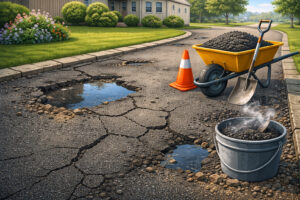
If you’re thinking about upgrading your driveway in Dublin, gravel is usually one of the first options that comes up. It’s common across the city and surrounding areas, especially on older properties or homes with a bit more space out front. We’re often asked about gravel driveway pros cons and whether it’s still a good choice with Ireland’s weather and modern housing estates.
As a local contractor, I’ve installed and replaced all sorts of driveways over the years. Gravel has its place, but it’s not right for everyone. In this guide, I’ll walk you through the honest benefits and drawbacks so you can decide what suits your home and lifestyle.
Benefits of Gravel Driveways
Lower Initial Cost
One of the biggest attractions of gravel is the cost. Compared to block paving or resin, gravel is generally more affordable to install. For homeowners working within a tighter budget, it can be a practical way to improve the look of a front garden without committing to a larger investment.
That said, the final cost still depends on proper groundwork. A well-installed gravel driveway needs a solid sub-base and good edging. Cutting corners underneath might make it cheaper today, but it rarely lasts.
Excellent Drainage
Dublin gets its fair share of rain. Gravel is naturally permeable, which means water drains straight through rather than pooling on the surface. This helps reduce surface water issues and can be useful in areas where drainage is a concern.
In fact, on some sites in parts of South Dublin where clay soil makes drainage tricky, gravel can perform better than fully sealed surfaces, provided the base is built properly.
Traditional Appearance
Gravel suits certain properties very well. Older homes, cottages or properties set back from the road often benefit from the softer, more traditional look. Different stone sizes and colours mean you can tailor the finish, whether you prefer a golden gravel or a neutral grey.
It can also reduce the hard, urban feel you sometimes get with large areas of concrete or tarmac.
Security Benefit
This is something customers rarely think about at first. Gravel is noisy underfoot and under tyres. It’s not silent like resin or paving. That crunching sound can act as a simple deterrent and alert you when someone pulls onto your drive late at night.
It’s not a security system, of course, but it’s a small advantage many homeowners appreciate.
Drawbacks of Gravel Driveways
Movement and Mess
Now for the honest part of the gravel driveway pros cons discussion. Gravel moves. Even with good edging, stones will migrate over time. You’ll find them on the pavement, in the car footwell and occasionally in the lawn.
On drives with a slope, gravel can shift downhill, especially after heavy rain. This is something we always assess during a site visit. Steeper drives may need stabilisation grids or might be better suited to another surface altogether.
Regular Maintenance Required
Unlike block paving which largely stays put, gravel needs occasional raking to keep it level and tidy. Areas where tyres turn, usually near the entrance or parking spots, tend to develop dips.
We often see homeowners in North Dublin who start off happy with gravel but after a few winters get tired of topping it up and evening it out.
Weed Growth
Even with a membrane underneath, weeds can appear over time. Seeds blow in and settle. Once they root into the debris that naturally builds up between stones, you’ll need to treat or remove them.
It’s manageable, but it does require attention. If you’re looking for something close to maintenance free, gravel may not be the best fit.
Not Ideal for Every Lifestyle
If you have small children riding bikes or scooters, gravel isn’t the smoothest surface. The same goes for wheelchairs, prams or high heels. I’ve had customers mention visiting relatives struggling to walk comfortably across loose stone.
Also, if you park multiple cars and turn wheels while stationary, gravel will shift more quickly than bound surfaces.
Maintenance and Practical Considerations
If you do choose gravel, proper installation makes all the difference. At a minimum, the driveway should include:
- A solid, compacted sub-base
- A quality weed membrane
- Strong edging to contain the stone
- Appropriate gravel depth, usually around 40 to 50mm on top
Without firm edging, gravel will simply spread into flower beds and onto paths. In busy areas like West Dublin estates where parking space is tight, containment is crucial.
Ongoing maintenance typically involves occasional raking, adding fresh gravel every few years and keeping weeds under control. After particularly wet winters in Greater Dublin, we sometimes see areas where the sub-base has weakened. Early repairs prevent more costly work later.
For some homeowners, that level of upkeep is perfectly acceptable. Others prefer the long-term stability of paving or resin. It really comes down to how much time you’re willing to spend keeping the surface tidy.
When customers ask us about gravel driveway pros cons, I usually start with one question: how do you use your driveway day to day? A quiet family home with light traffic is very different from a property with constant vehicle movement.
If you’re based in Dublin City, South Dublin, North Dublin or anywhere across Greater Dublin including Tallaght, Dundrum, Lucan, Clondalkin, Swords, Malahide, Bray, Greystones, Celbridge and Maynooth, it’s worth getting local advice before committing. Soil type, drainage and space all play a role.
At Unlimited Driveways & Patios we’ve installed, repaired and replaced gravel drives across the region, so we’ve seen what works and what causes headaches long term. If you’re weighing up your options and want straightforward guidance tailored to your property, get in touch with Unlimited Driveways & Patios and Request driveway advice.