
If you’re planning a new driveway Dublin homeowners often ask the same question: what surface will actually hold up to heavy vehicles without cracking, sinking or constantly needing repairs? It’s one thing to park a family saloon on your drive. It’s another to support a long-wheelbase van, a motorhome or a work truck day in, day out.
In Dublin, where we get steady rainfall, mixed soil conditions and plenty of older properties with limited foundations at the front, choosing the right surface really matters. Below, we break down what works, what doesn’t and what needs to happen underneath the surface if you want it to last.
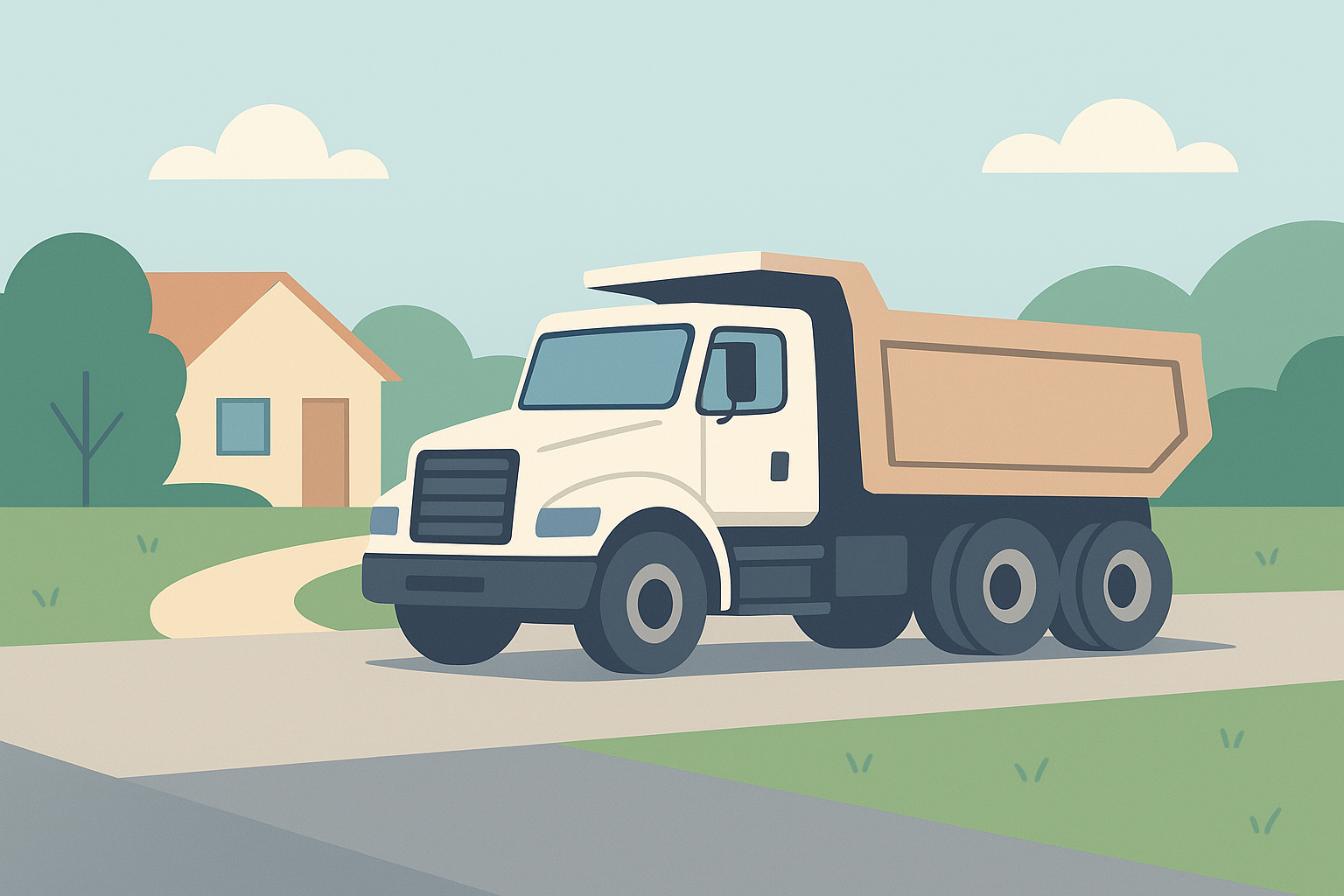
What Counts as a Heavy Vehicle?
When we talk about heavy vehicles, we’re not just referring to lorries. On domestic drives across Dublin City and the suburbs, it typically means:
- Transit-style vans used by tradespeople
- 3.5 tonne work trucks
- Campervans and motorhomes
- Caravans sitting stationary for long periods
- Households with two or three cars regularly turning on the spot
A van parked overnight might not seem excessive, but all that weight is concentrated through four relatively small tyre contact points. Over time, especially with poor ground preparation, that pressure causes dips and cracking.
Key Factors to Consider
Before even deciding on the finish, you need to think about what’s happening below the surface. The most common problems we see are not because of the top layer, but because the foundation wasn’t designed for the load.
Load-Bearing Capacity
The driveway must handle both the static weight of parked vehicles and the dynamic pressure of braking and turning. Turning wheels are actually harder on a surface than straight-line parking.
Ground Preparation
In parts of South Dublin such as Tallaght and Clondalkin, clay soil is common. Clay holds water and expands, which can lead to movement. In North Dublin areas like Swords and Malahide, you may encounter sandy subsoils that require proper compaction. Either way, a solid sub-base is non-negotiable.
Drainage
With Dublin’s regular rainfall, standing water will shorten the lifespan of any driveway. Proper falls, drainage channels and permeable solutions where appropriate help prevent soft spots developing underneath.
Maintenance and Lifespan
Some surfaces require resealing every few years. Others are virtually maintenance free but cost more upfront. For many homeowners, it’s about balancing budget with long-term durability.
Concrete Driveways
Concrete driveways Dublin properties rely on are often chosen for one simple reason: strength. When installed correctly with the right thickness and reinforcement, concrete is one of the most durable driveway surfaces available.
Strengths and Durability
Concrete handles heavy loads exceptionally well. For regular van use or a motorhome parked year-round, it’s a solid choice. Steel mesh reinforcement further increases its load-bearing capability and reduces the risk of cracking.
Cost Considerations
Concrete is generally more expensive than standard tarmac but may work out better long term if heavy use is expected. Cutting corners on thickness to save money is where problems start. For heavy-duty applications, a thicker slab is essential.
Ideal Use Cases
If you’re running a business from home with daily van traffic or storing heavier vehicles on a permanent basis, concrete is often the safest bet for a heavy duty driveway Dublin homeowners can depend on.
Reinforced Tarmac
A reinforced tarmac driveway is another popular option. Tarmac is flexible by nature, which actually helps in Ireland’s damp climate where minor ground movement can occur.
Benefits for Heavy Traffic
When laid thicker than standard and installed over a strong sub-base, reinforced tarmac performs very well under vans and light commercial vehicles. It’s also quicker to install than concrete and can often be used sooner.
Flexibility
Tarmac has a slight give to it, which means it is less likely to crack compared with rigid materials. However, if the base underneath is weak, you’ll see depressions forming in wheel tracks over time.
For many homes in Lucan, Dundrum and Celbridge where space is limited and vehicles turn sharply, reinforced tarmac provides a practical balance of strength and cost.
Block Paving
Block paving for heavy vehicles can work very well, but only if it’s installed properly. The blocks themselves are strong. The issue is usually what’s underneath them.
When It Works Well
With a deep, well-compacted sub-base and kiln-dried sand correctly vibrated in, block paving can comfortably support heavier vehicles. Individual blocks can also be lifted and replaced if there’s ever a problem.
When Reinforcement Is Essential
If the sub-base is too shallow, blocks will move, joints will open and ruts will appear. For heavy use, extra excavation and stronger base layers are needed. This is not the place to skimp.
For landlords or business owners who want a smart finish at the front of a property in Bray, Greystones or Maynooth, reinforced block paving can combine appearance with durability.
Resin-Bound Surfaces
Resin-bound driveways look fantastic and are permeable, which helps with drainage. However, they are not always the first recommendation for heavier commercial vehicles.
Resin is best suited to cars and lighter use unless it’s laid over a strong concrete or tarmac base specifically designed for heavier loads. Even then, constant turning of heavier vehicles can shorten its lifespan.
If appearance is the main priority and heavy use is occasional rather than daily, resin may be suitable. For regular work vans, there are tougher choices.
The Importance of Professional Groundworks and Sub-Base Installation
We’ve repaired plenty of driveways across Greater Dublin where the surface wasn’t actually the problem. The real issue was a shallow dig-out or poor compaction underneath.
For heavy vehicles, a proper installation typically includes:
- Full excavation to an adequate depth
- High-quality hardcore sub-base laid in layers and mechanically compacted
- Edge restraints to prevent spreading
- Appropriate drainage to suit the site
- A surface thickness designed specifically for the expected load
This is why choosing experienced driveway contractors Dublin homeowners trust is so important. The visible finish might look similar between two companies, but what’s underneath can vary significantly.
Conclusion
So, what is the best driveway surface for heavy vehicles? In most cases, concrete or reinforced tarmac installed over a properly prepared base will offer the strongest, longest-lasting result. Block paving can also work extremely well if the foundation is built for the load. Resin tends to be more suitable for lighter use unless supported by a heavy-duty base.
Every property is different. Soil conditions in Dublin City differ from those in South Dublin or North Dublin. Space constraints in older estates can affect design. That’s why a proper site visit matters. Whether you’re in Tallaght, Dundrum, Lucan, Clondalkin, Swords, Malahide, Bray, Greystones, Celbridge or Maynooth, investing in durable driveway surfaces designed for your specific needs will save you money and hassle in the long term.
If you’re considering upgrading your drive and want honest advice based on real ground conditions, the team at Unlimited Driveways and Patios can help. Contact Unlimited Driveways & Patios for a free site assessment and quotation for a heavy-duty driveway in Dublin.