
Your driveway does more than give you somewhere to park. It carries the weight of your car every day, deals with Irish weather year round and plays a big part in how your home looks from the road. I’ve lost count of the number of homeowners who only start thinking about it when something goes badly wrong. By that point, a proper fix often means looking at expert driveway installation services rather than another quick patch-up.
If you live in places like Swords, Malahide or Bray, you’ll know how heavy rain and damp conditions can affect outdoor surfaces. A driveway that looked fine ten years ago can quietly deteriorate underneath. So how do you know when it’s time to stop repairing and start planning a replacement?
Why Driveway Condition Matters for Safety and Kerb Appeal
A tired driveway is not just an eyesore. Cracks and loose blocks become trip hazards. Uneven patches can catch prams, bikes and mobility aids. In winter, small dips hold water which then freezes and becomes slippery.
From a practical point of view, damage tends to get worse quickly once it starts. Water seeps into small cracks, freezes, expands and breaks the surface apart. Before long you are dealing with potholes rather than hairline splits.
There is also the first impression factor. Estate agents will tell you that buyers notice the driveway straight away. Even if you are not planning to sell, most homeowners want to feel proud when they pull in after work. A clean, properly laid driveway makes the whole property look cared for.
Common Signs Your Driveway Needs Replacing
Minor wear is normal. Every driveway will age. The question is whether the issues are cosmetic or structural.
1. Widespread Cracking
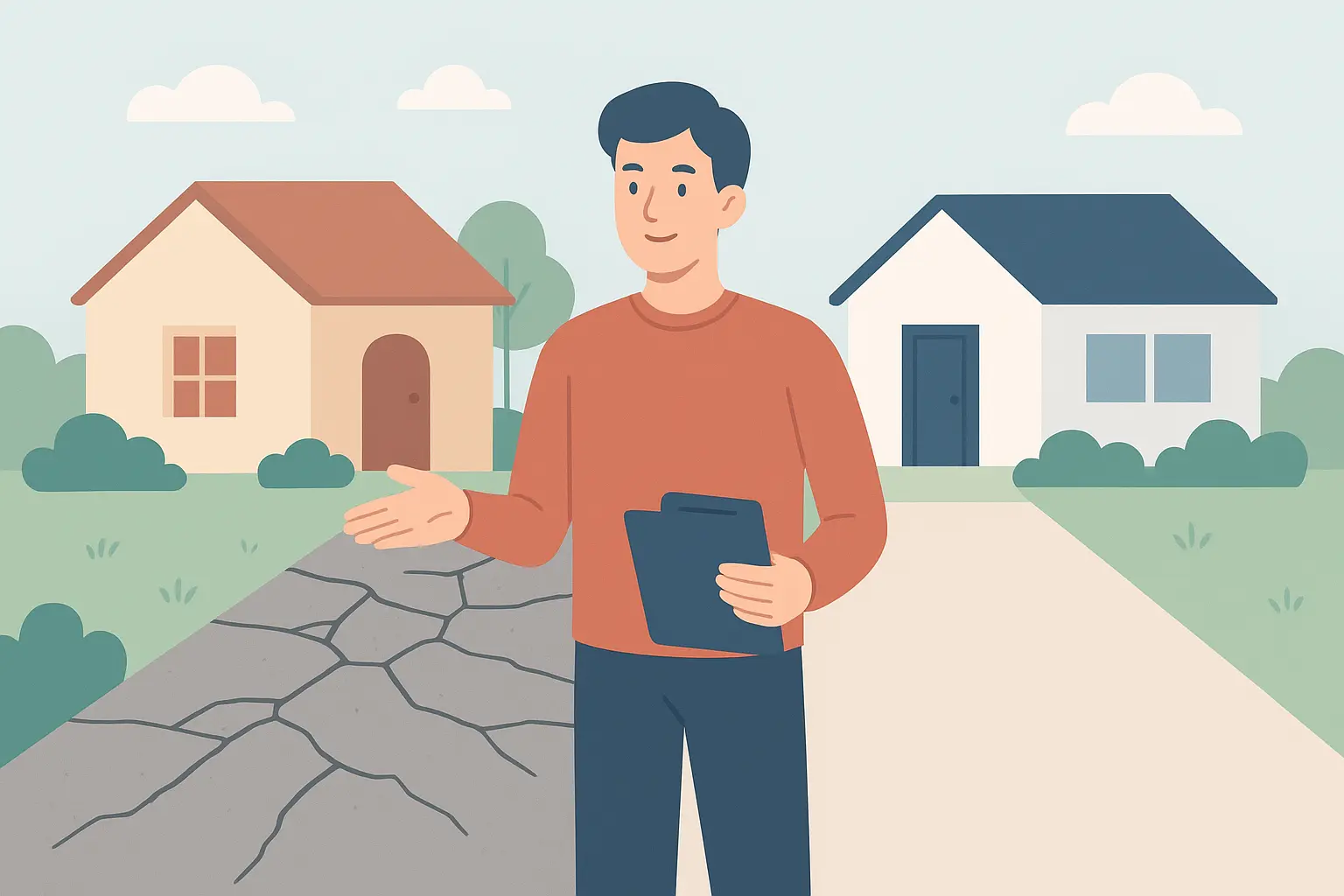
A few small cracks can often be filled. But if you notice long, spreading cracks across large areas or a spiderweb effect, that usually points to movement underneath. This often means the base layer has failed.
2. Sinking or Uneven Areas
If parts of the driveway are dipping or rocking underfoot, the sub-base may have been poorly compacted or washed away over time. I’ve seen cases where cars were slightly tilting on one side because the surface had settled that much.
3. Poor Drainage and Standing Water
Puddles that sit for hours after rain are a red flag. Proper falls and drainage should direct water away from your home. If water is pooling near the house or garage, that can lead to damp problems further down the line.
4. Loose or Missing Blocks
With block paving, a few loose bricks are easy to sort. However, if whole sections are shifting or weeds are constantly pushing up through wide joints, it may be a sign that the foundation is no longer stable. If you want to understand how modern paving should perform, it’s worth looking at examples of professional block paving installations.
5. Repeated Patch Repairs
One of the biggest clues is how often you are repairing the same area. If you’re ringing someone every year to patch tarmac or reset blocks, you may be spending good money after bad. Modern tarmac and asphalt driveways should not need constant attention when laid properly.
Repair vs Replacement: How to Decide What’s Most Cost-Effective
This is probably the most common question homeowners ask. The honest answer is that repairs make sense when the base is still sound.
If the damage is localised, such as one cracked corner caused by tree roots, a repair can buy you several more years. The key is whether the structure underneath is solid.
Replacement becomes the smarter option when:
- More than a third of the surface is affected
- The sub-base has failed or sunk in multiple spots
- Drainage is fundamentally wrong
- You want to upgrade the look and layout of the front of your home
It can feel like a bigger step financially, but a full replacement done correctly often works out cheaper over ten to fifteen years than ongoing patch jobs.
Best Materials for a New Driveway and Their Benefits
The right material depends on how you use the space and the style of your home.
- Block paving offers a classic look and can be lifted and relaid if needed. It’s popular in suburban areas and comes in a wide range of colours and patterns.
- Tarmac or asphalt gives a smooth, durable finish that copes well with heavy vehicles. It suits larger driveways and is generally low maintenance.
- Gravel is cost-effective and provides good drainage, though it does need periodic topping up and can spread if not properly edged.
A good installer will advise based on soil conditions, drainage needs and how many vehicles you park regularly. I’ve seen driveways fail simply because the base was not deep enough for the type of ground underneath.
How Long Should a New Driveway Last?
With proper preparation and installation, a new driveway should last at least 20 years, often longer.
The lifespan comes down to three things:
- A properly excavated and compacted sub-base
- Correct drainage and falls
- Routine maintenance such as cleaning and sealing where appropriate
Simple habits help. Keep drains clear of leaves, deal with oil stains early and avoid turning your steering wheel sharply when the car is stationary, as that can stress the surface over time.
Choosing Professional Installers and What to Expect
A driveway is only as good as what lies beneath it. The finished surface might look tidy on day one, but the real quality shows after a few winters.
A professional installer should:
- Excavate to the correct depth
- Lay and compact a suitable sub-base
- Ensure proper drainage away from your property
- Provide clear timescales and explain aftercare
You should also expect some disruption during the works. Machinery will be on site and there will be noise for a few days. A good team will keep things tidy and keep you informed so there are no surprises.
Investing in a Durable, Attractive Driveway
If your driveway is cracked, sinking or constantly being patched, it may be time to look beyond short-term fixes. A well-designed replacement improves safety, boosts kerb appeal and adds long-term value to your home.
For homeowners across Dublin and surrounding areas, companies like Unlimited Driveways & Patios have seen first-hand how the right preparation and materials make all the difference. If you would like straightforward advice on whether repair or replacement is the better route, you can get in touch for a free driveway consultation and discuss your options with an experienced team.